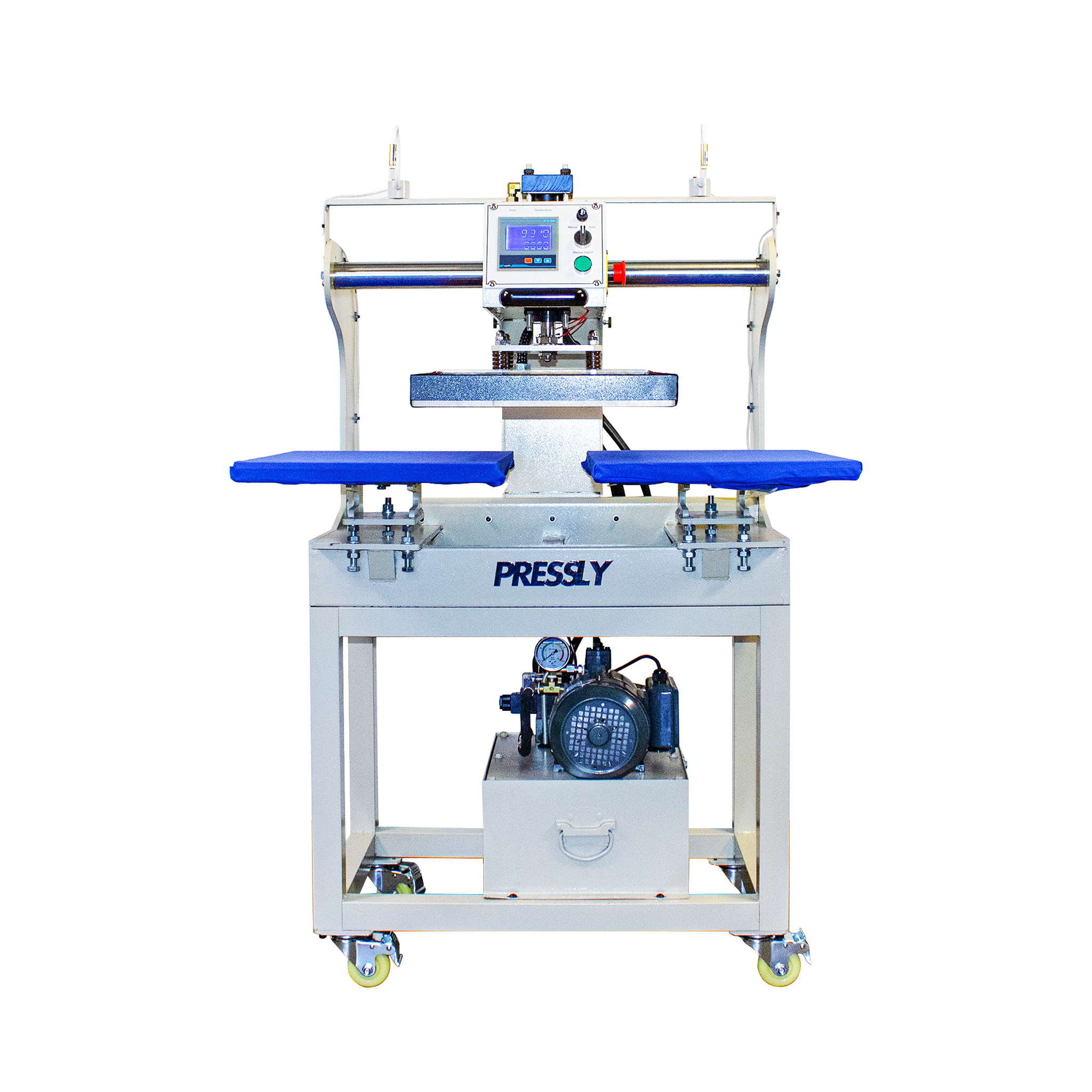
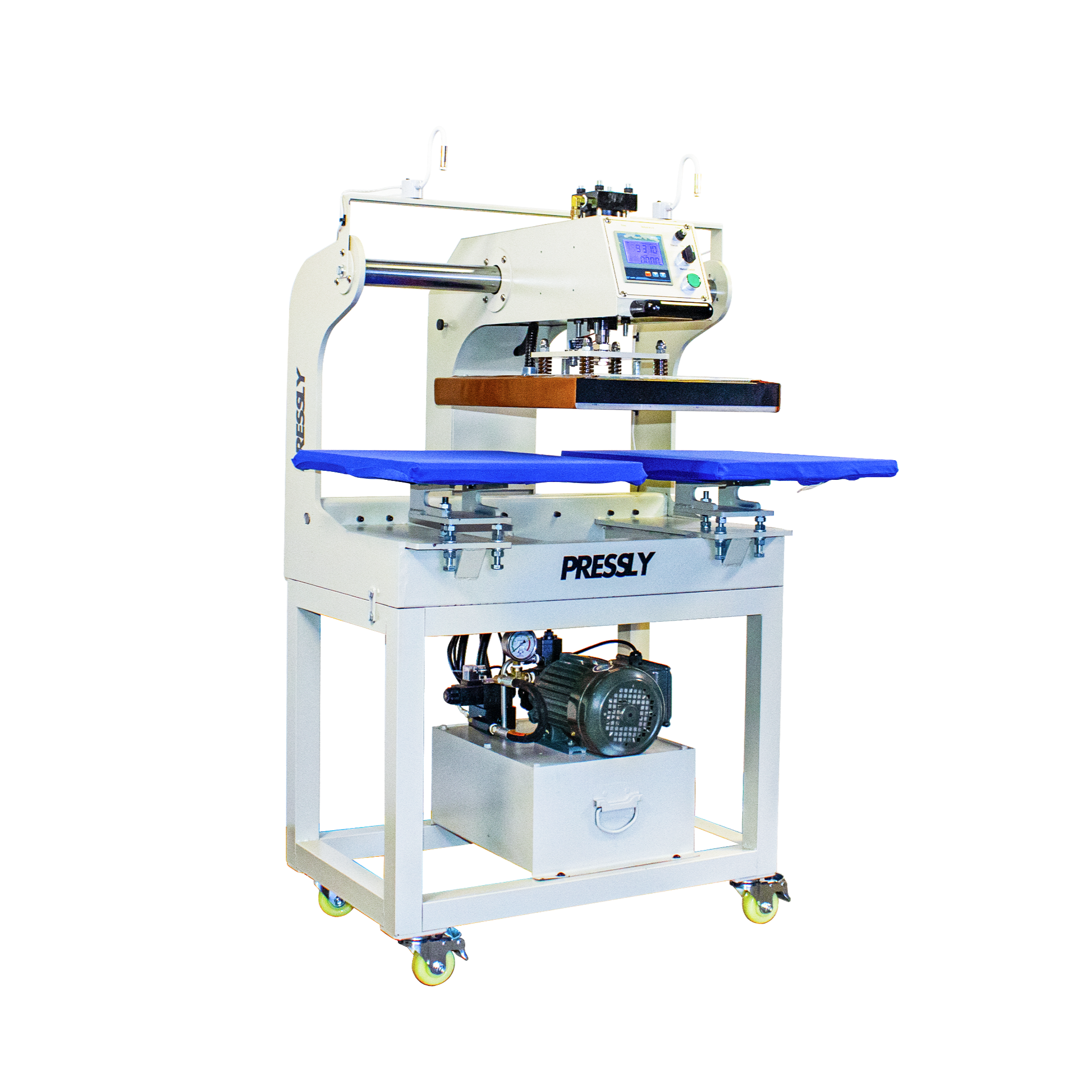
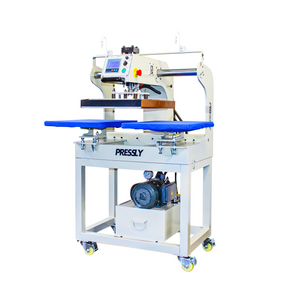
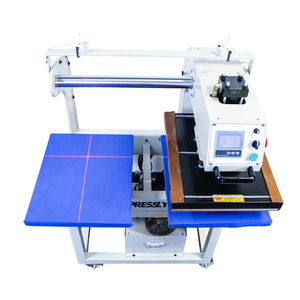
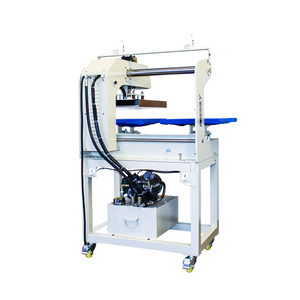
Hydraulic Head Moving Heat Press is a commercial heat-transfer machine designed to apply controlled heat and hydraulic pressure across a large platen area. The Pressly HYDRO1620 combines dual 15.7" x 19.7" platens with a movable heated head, adjustable pressure, digital temperature and timer controls, and laser positioning guides for organized apparel production.
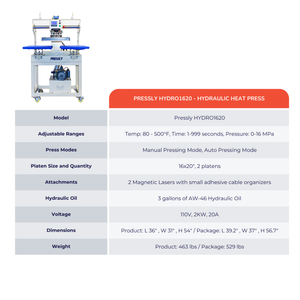
Model Pressly HYDRO1620
Platen Size 15.7" x 19.7" / 40 x 50 cm
Platen Quantity 2 platens
Power 110V / 2KW / 20A
Temperature Range 80–500°F
Timer Range 1–999 seconds
Pressure Range 0–16 MPa / 0–1102 lbs
Hydraulic Oil AW-68 recommended
What Is a Hydraulic Head Moving Heat Press?
A hydraulic head moving heat press uses a hydraulic system to apply pressure during the heat-transfer process. Instead of requiring the operator to close the press manually with a lever, hydraulic force controls the pressing stage.
The moving-head design allows the heated upper section to move between working positions while the lower platens provide separate areas for garment loading and unloading.
This configuration can be useful in commercial apparel workflows where repeatable placement, pressure control, and organized garment handling are important.
Dual 15.7" x 19.7" Heat Press Platens
The Pressly HYDRO1620 uses two 15.7" x 19.7" (40 x 50 cm) platens. The dual-platen layout allows one station to be prepared while the other is part of the pressing workflow.
The platen size provides room for many common apparel transfer applications, including:
- Front T-shirt graphics
- Large back graphics
- Hoodie designs
- Sweatshirt transfers
- Workwear logos
- DTF transfers
- Selected heat-transfer applications
Always compare the intended transfer dimensions and garment construction with the actual usable platen area before production.
How the Moving Head Design Supports Production
The heated head moves away from the garment-loading area, giving the operator access to the lower platen before the pressing cycle begins.
This layout can help when positioning:
- Large graphics
- Repeated logos
- Front and back transfers
- Garments requiring consistent placement
- Multiple items within an organized production sequence
Keeping the hot platen away from the active loading area can also make artwork alignment easier compared with trying to position a garment directly beneath a stationary heated platen.
Hydraulic Pressure Control
The HYDRO1620 uses a hydraulic pressure system with a listed range of 0–16 MPa / 0–1102 lbs.
Pressure is an important part of heat-transfer application because the transfer needs appropriate contact with the garment during the pressing cycle. The correct setting depends on the transfer, fabric, garment construction, and application instructions.
Important: Maximum available pressure is not automatically the correct pressure for every transfer. Use the pressure required by the transfer and garment combination rather than simply selecting the highest setting.
Temperature and Timer Controls
The heat press is listed with a temperature range of 80–500°F and timer range of 1–999 seconds. These controls allow the operator to configure the press according to the requirements of the transfer being applied.
Different transfer materials can require different combinations of:
- Temperature
- Press time
- Pressure
- Peel method
- Post-press procedure
Always follow the current application instructions for the transfer rather than treating one temperature and time combination as universal.
Using the Heat Press for DTF Transfers
A commercial heat press is one of the final stages of a DTF transfer workflow. After a transfer has been printed, powdered, cured, and prepared for application, the heat press bonds the finished design to the compatible garment.
A typical workflow includes:
-
Prepare the garment: Place the apparel item smoothly on the platen.
-
Check the print area: Keep seams, zippers, and raised elements from interfering with pressure where possible.
-
Position the transfer: Align the graphic according to the intended placement.
-
Set the press: Use the transfer's recommended temperature, pressure, and time.
-
Run the press cycle: Allow the hydraulic system to apply the configured pressure.
-
Follow the peel method: Peel according to the transfer instructions.
-
Post-press if required: Complete any finishing step specified for the transfer.
Explore DTF Transfers
Pair your heat press workflow with ready-to-press custom DTF transfer options.
Browse DTF Transfers
Magnetic Laser Guide Attachments
The current HYDRO1620 package includes two magnetic laser guide attachments. Positioning guides can provide visual reference lines when repeatedly aligning transfers on garments.
They may be useful for recurring placement tasks such as:
- Center-chest graphics
- Left-chest logos
- Repeated back placements
- Uniform programs
- Recurring branded apparel
For repeat production, combine visual guides with actual placement measurements rather than relying on visual estimation alone.
Plan Apparel Placement Before Pressing
A high-capacity press does not eliminate the need for accurate transfer placement. Establish the intended location before starting the production batch.
Placement Checklist
- Confirm the correct artwork.
- Check transfer width and height.
- Identify garment center.
- Record the approved placement measurement.
- Check seams, pockets, zippers, and collars.
- Use the same reference points across repeated garments.
- Inspect the first finished item before completing the batch.
Heat Distribution Across the Platen
The product uses a thick heat-plate design intended to support stable heating across the pressing area. Consistent heat distribution is important when applying larger transfers because different sections of the artwork should experience the required application conditions.
As part of routine production management, operators should monitor press performance and follow the manufacturer's maintenance procedures.
Hydraulic Oil Maintenance
The HYDRO1620 uses hydraulic oil as part of its pressure system. The manufacturer currently recommends AW-68 hydraulic oil.
Current product guidance advises checking the oil level using the sight gauge. If the level drops below approximately half of the gauge, hydraulic oil should be added according to the equipment instructions.
The product guidance also specifies replacing the hydraulic oil periodically. Follow the current user manual for the exact maintenance procedure.
Hydraulic System Maintenance Checklist
- Inspect hydraulic oil level.
- Use the recommended oil type.
- Watch for unusual hydraulic-system behavior.
- Keep the equipment area clean.
- Follow scheduled oil-change guidance.
- Use the official user manual for service procedures.
Electrical Requirements
The current product specification lists the heat press at 110V, 2KW, and 20A. Confirm that the installation location has the appropriate electrical infrastructure before the machine arrives.
The machine also includes two electrical outlets at the rear for the laser-guide attachments.
Installation planning: Have the electrical requirements reviewed before setup. Do not assume an ordinary outlet or extension cable is appropriate simply because the equipment is listed as 110V.
Machine Size and Workspace Planning
The HYDRO1620 is commercial equipment and requires suitable operating space.
-
Machine dimensions: 36" L × 31" W × 54" H
-
Product weight: 463 lbs / 210 kg
-
Package dimensions: 39" L × 37" W × 57" H
-
Package weight: 551 lbs / 250 kg
Plan for more than the physical footprint alone. Operators need working clearance for loading garments, moving the head, accessing controls, and maintaining the machine.
Who Is This Hydraulic Heat Press For?
The Hydraulic Head Moving Heat Press may be suitable for businesses that need a larger, structured heat-application workflow rather than a small manual hobby press.
Potential users include:
- DTF transfer shops
- Custom apparel businesses
- Print shops
- Merchandise producers
- Uniform decorators
- Businesses processing repeated apparel orders
- Production teams working with larger transfer sizes
Equipment selection should still be based on expected order volume, transfer types, available workspace, electrical infrastructure, and operator workflow.
Hydraulic Heat Press vs. Manual Heat Press
The primary difference is how pressing pressure is generated and managed.
Hydraulic Heat Press
- Uses hydraulic force for the pressing cycle.
- Provides adjustable pressure control.
- Can reduce reliance on manual closing force.
- Can support structured commercial workflows.
Manual Heat Press
- Usually relies on operator force to close the machine.
- May be suitable for lower-volume or smaller-scale work.
- Has a simpler operating structure.
The better choice depends on production needs rather than machine type alone.
Dual-Platen Workflow vs. Single-Platen Pressing
The HYDRO1620's two-platen configuration creates two working stations. While one garment is associated with the active pressing station, another platen can be used as part of the preparation and unloading workflow.
The practical benefit depends on how the operator organizes production, garment placement, and transfer preparation.
Test Your DTF Transfer Settings
Before pressing an entire apparel order, test the actual combination of transfer, garment, temperature, time, and pressure.
Evaluate:
- Transfer adhesion
- Graphic appearance
- Garment response to heat
- Pressure distribution
- Peel behavior
- Placement
- Post-press result where applicable
Once an approved setup is established, record the settings for repeat orders.
Save Heat Press Settings for Repeat Production
A repeatable production record can reduce guesswork when the same apparel project returns later.
Production Record
- Transfer type
- Garment brand and style
- Fabric composition
- Temperature
- Press time
- Pressure setting
- Peel method
- Post-press requirement
- Transfer dimensions
- Placement measurements
What Is Included?
The current product package includes:
- Pressly HYDRO1620 Hydraulic Head Moving Heat Press
- 2 magnetic laser guide attachments
- 1-year limited warranty
- USA-based support via phone or email
Hydraulic oil is listed separately and is not included with the equipment. Confirm current package contents before ordering.
Warranty and Support
The HYDRO1620 is currently listed with a 1-year limited warranty from the purchase date. Warranty coverage applies to eligible non-consumable components under normal use and proper maintenance.
Consumable and wear-related components may be excluded. Review the current product warranty terms before purchasing, particularly if the machine will be used in a high-volume production environment.
For additional equipment options, browse the DTF Equipment collection.
Frequently Asked Questions About the Hydraulic Head Moving Heat Press
What is a Hydraulic Head Moving Heat Press?
It is a heat-transfer machine that uses hydraulic pressure and a movable heated head to apply transfers to compatible garments and materials.
What size are the platens?
The Pressly HYDRO1620 has two platens measuring approximately 15.7" x 19.7", or 40 x 50 cm, each.
Does the heat press have two platens?
Yes. The current product specification lists two lower platens as part of the HYDRO1620 setup.
What temperature range does the heat press support?
The listed temperature range is 80–500°F. Use the temperature specified for the transfer and garment combination rather than automatically using a high setting.
What is the timer range?
The current specification lists an adjustable timer from 1 to 999 seconds.
What pressure range does the hydraulic press provide?
The product specification lists a pressure range of 0–16 MPa, or up to approximately 1102 lbs.
What hydraulic oil does the machine use?
The current product guidance recommends AW-68 hydraulic oil. Follow the user manual for filling and maintenance procedures.
What power does the HYDRO1620 require?
The current electrical specification is 110V, 2KW, and 20A. Verify the installation circuit and electrical requirements before setup.
Does it include laser guides?
Yes. The current product package lists two magnetic laser guide attachments.
Can I use this hydraulic heat press for DTF transfers?
Yes, the press can be incorporated into a DTF transfer application workflow. Use the time, temperature, pressure, and peel instructions specified for the particular transfer and garment.
Build a More Organized Heat Press Workflow
The Hydraulic Head Moving Heat Press combines hydraulic pressure control, dual 15.7" x 19.7" platens, a moving heated head, digital temperature and timer settings, and laser positioning guides within one commercial heat-transfer station. Before installation, verify electrical requirements, workspace, hydraulic maintenance needs, and the application settings required for the transfers you plan to press.
Explore the DTF Equipment collection or browse DTF Transfers for additional production options.